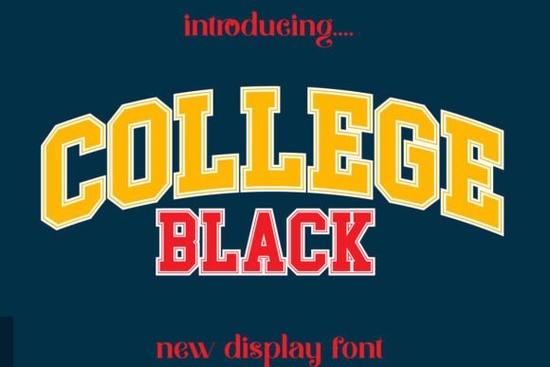
If you need a heavy, modern typeface that grabs attention without feeling cluttered, College Black Font is a straightforward choice for display work. This style works best when paired with short phrases, large layouts, or high-impact visuals. Many designers, crafters, and print-on-demand sellers look for a bold sans-serif that holds up well on team apparel, event posters, and digital banners. The thick strokes and clean geometry make it highly legible even at smaller scales, which saves you from guessing whether your final layout will read well on screen or in print.
What kinds of projects benefit from this bold display style?
The weight and structure of this typeface make it a reliable pick for sports branding and athletic wear. When you print it on jerseys or league merchandise, the letters stay distinct and punchy. It also translates well to movie posters, documentary titles, and book covers where the headline needs to stand out before a potential buyer even opens the page. If you run a small creative business, you can drop this into social media graphics, game thumbnails, or tournament brackets and keep the visual hierarchy clear.
For those exploring similar display typography options, checking out a vintage athletic collection can help you build a cohesive set of branding assets. You might also pair this with a textured alternative if your layout calls for a more tactile, worn look. The key is matching the letter weight to your background contrast so the text remains readable at a glance.
How do I keep heavy lettering from feeling too cramped?
Thick display faces tend to crowd together if you leave tracking on auto. Adjusting the letter spacing manually gives the characters room to breathe and stops the ascenders and descenders from overlapping in tight lines. A practical rule is to increase tracking by ten to twenty percent when working with all-caps phrases. If you are setting longer subheadings, stick to sentence case to reduce visual density. You will also want to avoid placing this near decorative scripts in the same text block, as the contrast often pulls focus away from your main message.
When you need a softer companion for body copy or captions, a retro distressed typeface can provide enough texture difference without clashing. For clean, minimalist layouts, a rounded sans serif usually balances the sharp edges nicely. You can explore how different weights interact by searching for College Black alongside lighter companions to test your hierarchy before committing to a final layout.
What should I verify before sending designs to print or cut?
Cutting machines and vinyl printers generally prefer SVG or PNG files with transparent backgrounds. If you are sending artwork to a professional print shop, stick with PDF or EPS to preserve vector paths and prevent rasterization. Digital designers working in Figma, Illustrator, or Canva should install the OTF or TTF version directly into their system font folder. Always preview your text at actual size before exporting. A design that looks crisp on a twenty-seven inch monitor can turn muddy on a phone screen if the stroke thickness is pushed too far.
If you are unsure about commercial usage, review the license sheet included with your download. Most display fonts allow physical goods and digital products, but some creators require an extended license for large-scale merchandising. Checking terms early saves you from reworking files after you have already placed a print order. You can also compare this style with other Varsity Spirit alternatives to ensure your typography aligns with current market trends. For additional spacing guidelines, reviewing Helvetica documentation offers practical insights into kerning and baseline alignment.
How can I test color contrast effectively without guesswork?
Heavy lettering absorbs a lot of white space, which means your background choice directly affects readability. Dark charcoal or deep navy backgrounds usually work better than mid-tones because they create sharp separation. If you must use a light background, consider adding a subtle drop shadow or an outer stroke to prevent the letters from blending into the negative space. For sports themes, try a two-color scheme that matches school colors or team logos. Keep the palette limited to two or three main tones so the typography remains the focal point.
When testing your layout, zoom out to thirty percent or step back from your monitor. If the phrase still reads clearly at a glance, you have struck the right balance. You can also run a quick grayscale filter over your draft to check value contrast without getting distracted by hue. This simple step catches readability issues before you finalize a file for production. Searching for Chunky Texture or Welcome alongside this font will give you more pairing options for different seasonal campaigns.
- Verify license terms for your intended commercial use before launching a store.
- Adjust tracking by ten to twenty percent to prevent overlapping strokes in all-caps lines.
- Export in the correct format (SVG for cutters, PDF for offset, OTF for screens).
- Preview at actual size on both light and dark backgrounds to catch contrast gaps.
- Pair with a simple supporting typeface to maintain clear visual hierarchy.
- Save layered working files so you can adjust spacing or swap colors quickly later.
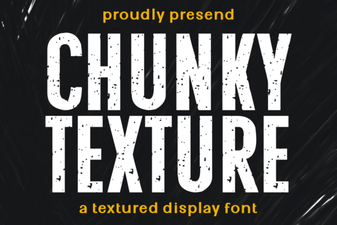 Chunky Fonts: Bold Text for Creative Designs
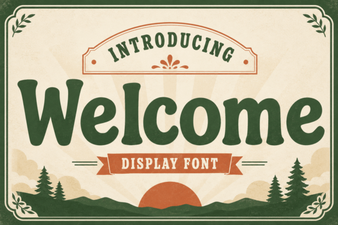 Welcome Fonts to Elevate Your Design Projects
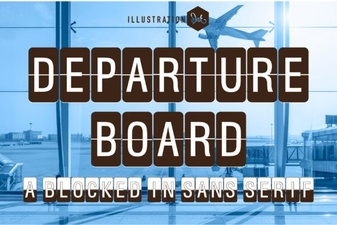 The Departure Board Font: Classic Travel Typefaces
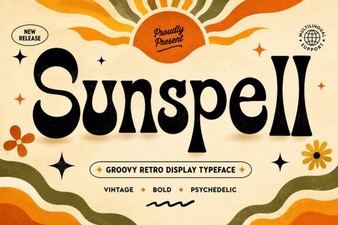 Sunspell Font: Design for Creative Projects
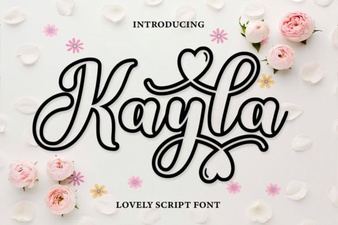 Kayla Outline: Elegant Font Designs & Project Ideas
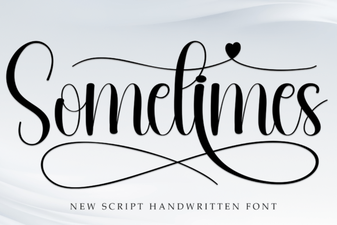 Sometimes Font: Creative Tips & Design Ideas